
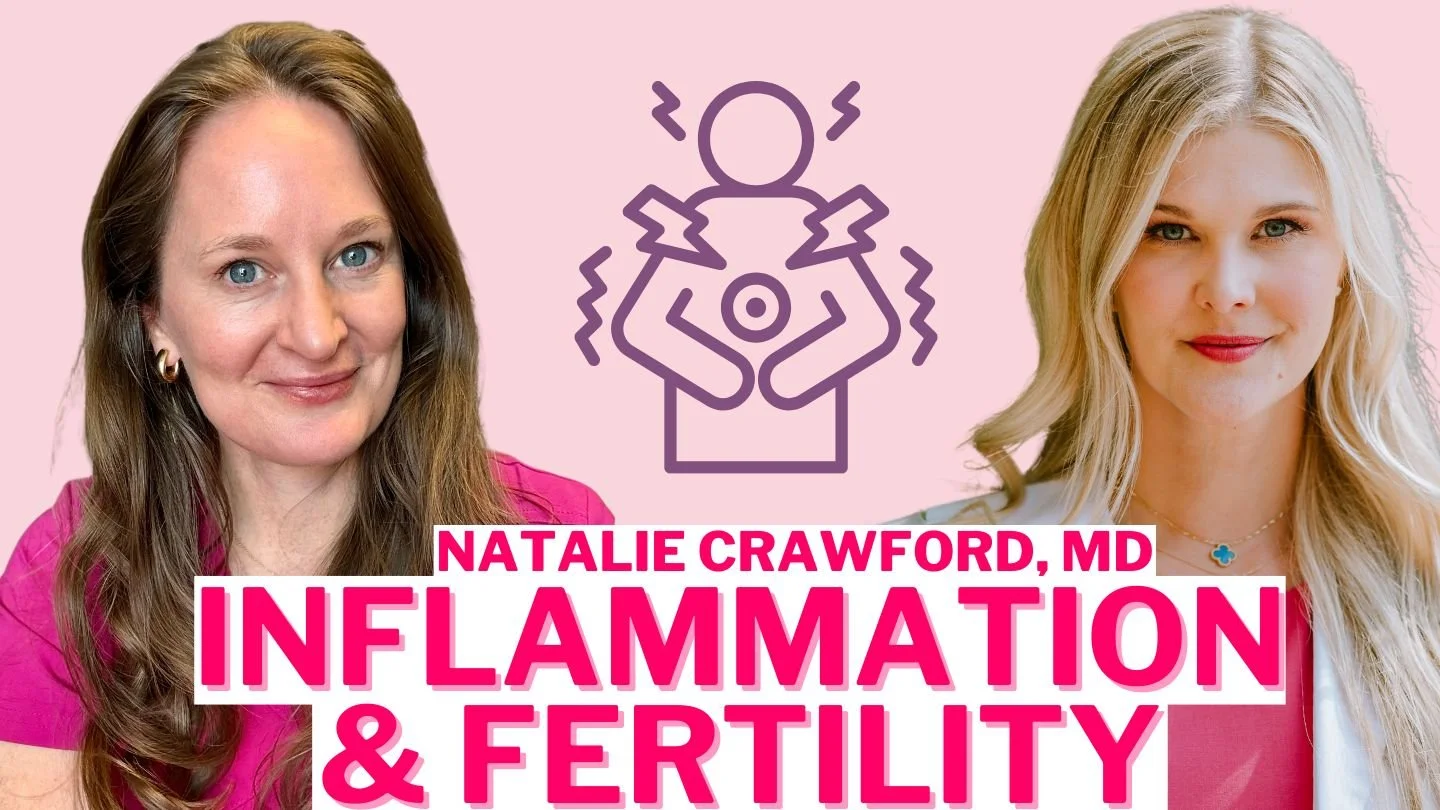
Is Inflammation Hijacking Your Fertility? Answers from Dr. Natalie Crawford
What if inflammation is quietly affecting your fertility? What if the key to improving egg quality and hormonal balance isn't just medical treatment, but the everyday choices you make? And what if understanding your body earlier could change your entire fertility journey?
In this in-depth exploration, we dive into the powerful role of inflammation in reproductive health with the help of fertility specialist Dr. Natalie Crawford. As the author of the highly anticipated book The Fertility Formula, Dr. Crawford shares how her own experience with infertility and pregnancy loss shaped her passion for empowering patients with science-based fertility education.
Inflammation's Quiet Influence on Fertility
Chronic inflammation is a growing concern when it comes to fertility challenges, yet it often flies under the radar. As Dr. Crawford explains, "Inflammation is essentially when your immune system is constantly activated and this can happen for a variety of different reasons. It can definitely happen from disease states, like autoimmune disease, but little exposures that we have - things like sleep, stress, movement, diet, toxic exposures - can all activate this immune system and cause what we call chronic inflammation."
This chronic inflammation can have a profound impact on fertility in multiple ways. Dr. Crawford uses an insightful airport analogy to illustrate the problem:
"If we think about your brain as air traffic control, they are constantly interpreting signals and then sending out signals or commands for the moving parts. If we think about your ovary as the plane, we think about the runway as your uterus, we can think about inflammation as potentially being like a hail storm, like the weather. That's like the environment of your body can be the weather and inflammation is a hail storm. So of course in the middle of the hail storm, it's going to be harder for air traffic control to hear the signals that are coming in. It's going to be harder for the pilots on the plane to hear the signals coming from the brain. So you've got this direct interference in brain-ovary communication."
But the impact of chronic inflammation doesn't stop there. Dr. Crawford explains that inflammation can also "damage the runway, can dent the plane, can harm your equipment." Even after the inflammatory response has resolved, the lasting harm can continue to impact fertility.
This is why Dr. Crawford views unexplained infertility as a potential sign of underlying chronic inflammation, rather than just "bad luck." As she shares, "If we're not getting pregnant, you know, especially that unexplained infertility, when you go through our big checklist and we're not really getting an answer, to me, this is a sign of chronic inflammation and metabolic dysfunction until proven otherwise, because something is disrupting this system and we need to make sure that we're keeping that in mind when we're looking at what we can do about it."
Insulin Resistance: A Key Culprit
One of the most significant ways inflammation can impact fertility is through insulin resistance. As Dr. Crawford explains, insulin resistance occurs when your cells become less responsive to the insulin hormone, leading to chronically elevated blood sugar and insulin levels.
This insulin resistance creates a cascade of problems for fertility:
High insulin levels are directly inflammatory, driving visceral fat storage and changing the ovarian environment to produce more androgens.
Insulin resistance impairs egg quality and ovarian function, making it harder to get pregnant.
The constant stress on the body from high insulin and blood sugar can disrupt the delicate hormonal balance needed for healthy ovulation and implantation.
Importantly, insulin resistance isn't just a concern for those with diabetes. As Dr. Crawford shares, "It's not just food. Food is a huge contributor to this problem. But stress, sleep directly correlate with insulin resistance. In fact, the mechanism that chronic stress can contribute to infertility is because of insulin resistance itself."
That means even seemingly healthy individuals may be struggling with underlying insulin resistance that's quietly undermining their fertility. The good news is that lifestyle interventions targeting insulin resistance can make a big difference.
Stress, Sleep, and the Fertility-Inflammation Connection
Chronic stress is another major driver of inflammation that can profoundly impact fertility. As Dr. Crawford explains, our bodies are designed to handle acute stress - like encountering a bear in the wild. In that scenario, the stress response would temporarily elevate cortisol and blood sugar to fuel the body's fight-or-flight reaction. But in modern life, we face a constant barrage of smaller stressors that keep our stress response chronically activated.
"What happens when cortisol is released and you start to have this acute stress response is that your body reverts back to breaking down the glucose stores from your liver to put more glucose into your bloodstream. Because we don't want your survival, running from the bear, having glucose to fuel your muscles, your heart, and your lungs to depend on when you had your last meal," says Dr. Crawford.
The problem is that most people's stress-management strategies, like eating comfort foods or having a glass of wine, only compound the issue by further elevating blood sugar and insulin. This vicious cycle of chronic stress, inflammation, and insulin resistance is a major threat to fertility.
That's why Dr. Crawford emphasizes the importance of proactive stress management through practices like exercise, meditation, and social connection. "If we think about stress, your body is meant to respond to an acute stressor. So, what happens when you're constantly making more cortisol? We're putting even more glucose in. And so, what we realize is that modern stressors and the modern response to stress...they all add up."
Sleep is another critical piece of the puzzle. As Dr. Meredith Broderick discussed in a previous episode, poor sleep quality can significantly impair fertility by disrupting hormones, ovulation, and egg quality. Dr. Crawford reinforces this, noting that "your body naturally becomes more insulin sensitive" during sleep, allowing it to "re-prime and reprogram those cells" and lower inflammation.
In fact, Dr. Crawford shares that "for every hour less sleep a woman gets, she gets less eggs in an IVF cycle. We know that men have lower testosterone, poorer sperm counts, and it takes longer to get pregnant" when they don't get enough quality sleep.
Empowering Fertility Through Lifestyle
With the powerful role of inflammation, insulin resistance, stress, and sleep in mind, Dr. Crawford's approach to fertility care is centered on empowering patients through education and lifestyle optimization. As she explains, "I really viewed it as three parts that if you really want to think about what's the formula you need, the first is going to start with education, basic facts about your body that we all should learn earlier."
This foundational knowledge allows patients to become active advocates for their health, understanding what tests to request, what questions to ask, and how to make informed decisions. But the final piece of the puzzle is what Dr. Crawford calls "optimize" - making daily lifestyle choices that reduce inflammation and support fertility.
Nutrition for Fertility
When it comes to diet, Dr. Crawford emphasizes the importance of focusing on whole, minimally processed foods. She recommends:
Unlimited fruits and vegetables - aim for 2 servings at every meal
Prioritize complex carbohydrates over simple sugars and refined grains
Choose full-fat dairy over low-fat options
Limit red meat and opt for more plant-based proteins
Avoid ultra-processed foods, added sugars, and artificial sweeteners
While there's no one-size-fits-all "fertility diet," Dr. Crawford encourages patients to pay attention to how their body responds to different foods. "Learning to listen to that, especially when it comes to diet, can be really helpful to figure out what you are sensitive to," she advises.
Movement and Strength Training
Exercise is another powerful tool for reducing inflammation and improving fertility. Dr. Crawford emphasizes the importance of strength training, as building muscle mass can enhance insulin sensitivity and glucose utilization, taking pressure off the pancreas.
"Your skeletal muscle is one of the keys that can actually help you improve your hormonal health and decrease inflammation and really fight insulin resistance," she explains. "When you have more skeletal muscle and when you use it, your body can use glucose up without needing insulin. That means your cells are going to see less insulin and therefore become more insulin sensitive."
Beyond strength training, Dr. Crawford recommends finding ways to move your body throughout the day, whether that's a brisk walk, some squats, or a quick yoga flow. The key is using your muscles to metabolize the glucose and cortisol released during stress, rather than letting it contribute to inflammation.
Stress Management and Sleep Hygiene
As we've discussed, managing stress and prioritizing sleep are essential for fertility. Dr. Crawford advises carving out 20 minutes per day for stress-relieving activities like meditation, journaling, or simply spending time in nature. And when it comes to sleep, she recommends aiming for 7-8 hours per night, creating a calming bedtime routine, and minimizing screen time before bed.
"We want to think about the decisions I make the majority of the time, how do I leverage that to lower my inflammatory burden?" says Dr. Crawford. "And that is going to set us up for success so that we can be in the place to say, 'I did everything I could. I, you know, am controlling my own egg quality, my own hormonal response.'"
A Holistic, Empowered Approach to Fertility
Through her book The Fertility Formula and her work as a fertility specialist, Dr. Natalie Crawford is on a mission to educate and empower people to take a proactive, whole-body approach to their reproductive health. By understanding the powerful role of inflammation, insulin resistance, stress, and lifestyle factors, individuals can make informed choices to optimize their fertility - whether they're just starting to think about having a family or navigating the challenges of infertility.
As Dr. Crawford shares, "If we elevate that fund of knowledge and we give you the tools to then advocate and ask questions, you could be a more active participant on the journey. But the last piece of the puzzle is what I call optimize. This is really looking at your life and making decisions every single day that are going to put you in the best chance for success so that you don't have to sit there and wonder, was it this? Was it that? Should I be doing?"
By empowering patients with education, advocacy, and lifestyle optimization, Dr. Crawford is helping to transform the fertility landscape - one empowered individual at a time. To connect with Dr. Crawford and learn more, be sure to check out her website, Instagram, and podcast.
Additional Resources for Support
Dr. Shahine shares a wealth of additional resources to help those struggling with infertility and pregnancy loss. These include:
Dr. Shahine's free newsletter, which provides ongoing support and education
Her "Brave and Curious" podcast, which delves deeper into fertility-related topics
Her books on fertility and miscarriage, including the best-selling "Not Broken: An Approachable Guide to Miscarriage and Recurrent Pregnancy Loss"
Her active social media presence on Instagram, TikTok, Twitter, Facebook, and LinkedIn
Stay brave, stay curious, and trust that you've got this!